
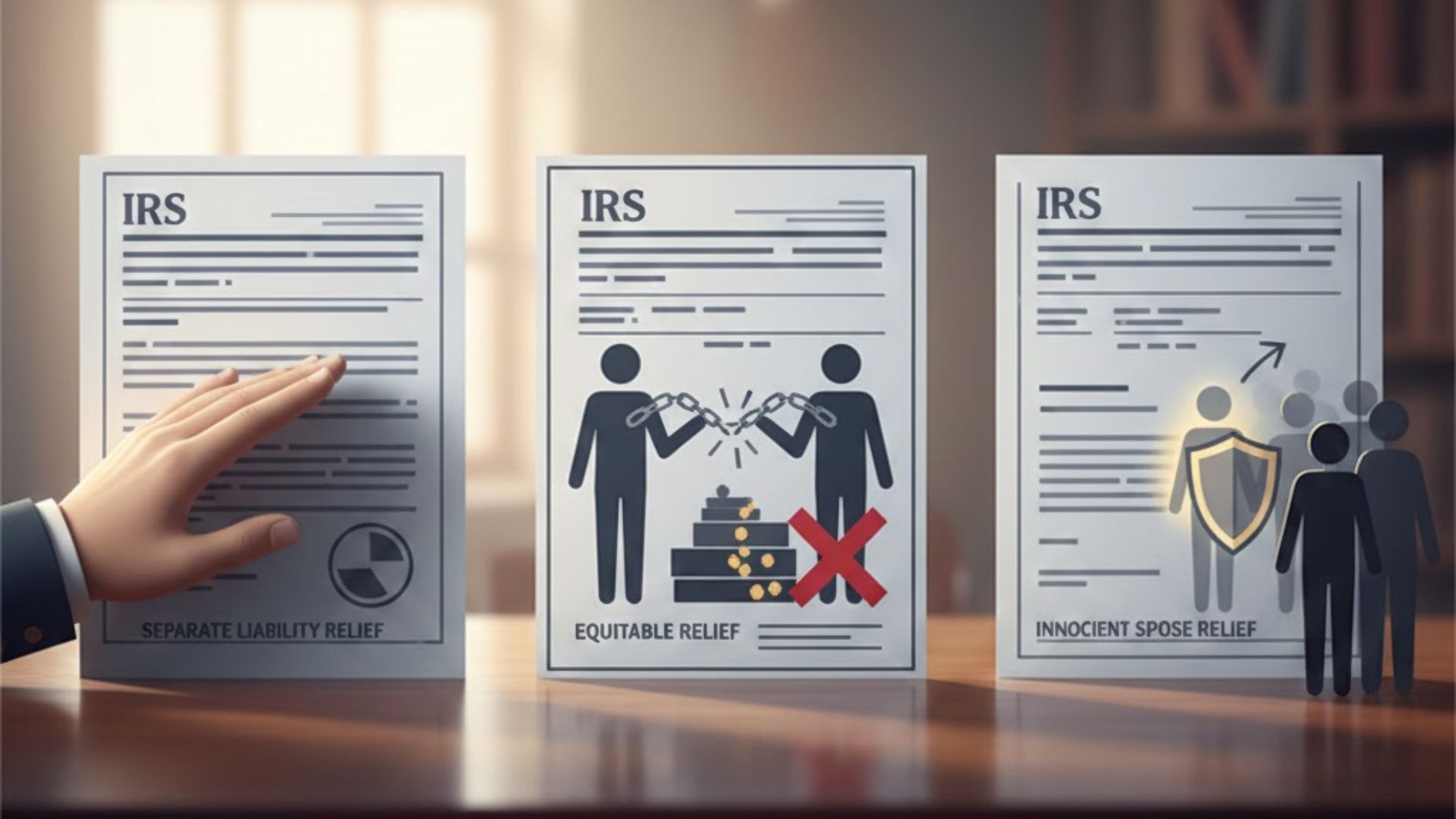
If a current or former spouse’s actions left you facing tax owed on a joint return, the IRS offers three forms of Innocent Spouse Relief. This guide summarizes Traditional Relief, Separation of Liability, and Equitable Relief, and explains Form 8857 and typical supporting documents.
What Is Traditional Innocent Spouse Relief?
Traditional Relief can remove your share of tax resulting from an understatement or erroneous item you did not know about and had no reason to suspect when signing a joint return.
Who Qualifies for Traditional Innocent Spouse Relief?
To be considered, requesters generally must meet these tests:
- Joint Return: A joint federal return was filed for the year in question.
- Unawareness: You did not know—and had no reason to know—about the understatement when you signed the return.
- No Significant Benefit: You did not receive a meaningful financial benefit from the items that caused the understatement.
- Fairness: Considering all facts, it would be unfair to hold you responsible for the tax.
These criteria protect spouses who played no role in or had no awareness of the other person’s tax choices.
How Does Traditional Relief Protect Spouses from Joint Tax Liability?
If approved, Traditional Relief removes the innocent spouse’s portion of the understated tax so you’re not personally liable for it. The legal framework emphasizes fairness for people who neither caused nor knew about the error.
How Does Separation of Liability Relief Work?
Separation of Liability Relief divides tax items so each spouse is responsible only for the portion that properly belongs to them. It is commonly used when couples are divorced or legally separated.
What Are the Requirements for Separation of Liability Relief?
To qualify you generally must meet these conditions:
- Filing Status: A joint return was filed for the year at issue.
- Divorce or Separation: You are divorced, legally separated by court decree, or you didn’t live with the other spouse during the 12 months before requesting relief.
- Allocation of Items: You can show how income, deductions, credits, and other tax items should be allocated between you and your spouse.
When requirements are met, the IRS assigns items and determines each person’s share of the liability.
How Is Tax Liability Divided Under Separation of Liability Relief?
The IRS reviews income, deductions, credits, and other items, assigning each to the responsible spouse; allocation and records determine what each person owes.
What Are the Requirements for Equitable Relief?

Equitable Relief is available when a case doesn’t meet Traditional or Separation tests but fairness supports relieving the spouse based on the totality of the circumstances.
Which Factors Does the IRS Consider for Equitable Relief?
The IRS weighs several factors, including:
- Economic Hardship: Whether paying the tax would create undue financial hardship.
- Knowledge: Whether you knew—or should have known—about the understatement.
- Abuse or Coercion: Any domestic abuse or coercion that limited access to information or decision-making.
- Tax Compliance: Your filing and payment history and whether you acted in good faith.
- Legal Obligations: Whether you have a separate legal obligation to pay the tax.
The IRS balances these considerations to decide if holding you liable would be unjust.
When Is Equitable Relief Appropriate Compared to Other Relief Types?
Use Equitable Relief as a safety net when deception, abuse, or severe hardship makes collection unfair, but the case doesn’t meet Traditional or Separation criteria.
How Do You Apply for IRS Innocent Spouse Relief Using Form 8857?
File Form 8857, Request for Innocent Spouse Relief, and include supporting documents. An accurate, well-documented filing starts the IRS review and improves your chances of a favorable determination.
What Information and Documentation Are Needed for Form 8857?
Collect documents that show how items were reported and that back your account. Helpful items include:
- IRS Transcripts: Wage & Income or Account Transcripts that confirm IRS records.
- Income Records: W‑2s, 1099s, and other proof of income.
- Financial Statements: Bank and brokerage statements, tip logs, and similar records.
- Explanations for Discrepancies: Clear, dated explanations and evidence for differences from IRS records.
Also include documents showing lack of knowledge, evidence of abuse, or proof of financial hardship when relevant.
What Happens After Filing Form 8857?
After you submit Form 8857 the IRS reviews your request and may ask for more information—respond promptly. Reviews typically take several months; the IRS will send a written determination. For help, consider a tax professional or Contact Clear Tax Resolution.
| Relief Type | Qualification Criteria | Key Benefits |
| Traditional Innocent Spouse Relief | Joint return; unaware of understatement; no significant benefit; unfair to hold liable | Removes the innocent spouse’s share of the understated tax |
| Separation of Liability Relief | Joint return; divorce/separation or 12+ months living apart; demonstrable allocation of items | Allocates tax so each spouse pays only their proper share |
| Equitable Relief | Doesn’t meet other tests but facts make liability unfair | Provides relief based on fairness and individual circumstances |
Frequently Asked Questions
What is the difference between Traditional Innocent Spouse Relief and Equitable Relief?
Traditional Relief focuses on lack of knowledge about an understatement; Equitable Relief looks at broader fairness when other tests aren’t met, such as hardship or abuse.
How can I prepare for the IRS review process after submitting Form 8857?
Organize and keep copies of all documents, track communications (dates, names, summaries), and be ready to supply additional records quickly. Professional help can ensure your file is complete and clear.
What should I do if I believe my spouse is hiding income or assets during the application process?
Document discrepancies (bank activity, unexplained deposits, inconsistent reporting) and include available evidence with your application. Consider legal or tax counsel to address concealment.
Can I apply for Innocent Spouse Relief if I have already paid the tax owed?
Yes. You can apply after paying; if approved you may be eligible for a refund. File within applicable time limits and include supporting documentation.
What happens if I miss the deadline to apply for Innocent Spouse Relief?
Missing deadlines can limit relief options. You may still explore alternatives like payment plans or other programs—consult a tax professional promptly.
Are there any specific circumstances that might expedite the review of my application?
There’s no guaranteed fast track, but severe economic hardship or documented abuse may receive prioritized attention. A complete, well-documented application reduces delays.
What are the common mistakes to avoid when applying for Innocent Spouse Relief?
Avoid incomplete documentation, vague explanations, and missed deadlines. Provide transcripts, income records, and concise dated statements to strengthen your case.
How can I find a tax professional to assist with my Innocent Spouse Relief application?
Seek experienced CPAs, enrolled agents (EAs), or tax attorneys with innocent-spouse experience. Ask for referrals, check credentials, and choose someone who explains strategy clearly.
What should I do if I receive a notice from the IRS after applying for relief?
Read the notice carefully and respond quickly with requested information. If unsure how to reply, get professional help to protect your case.
Can I receive Innocent Spouse Relief for tax years that are no longer under audit?
Yes. You may apply for closed years if you meet eligibility rules and file within the applicable window.
What happens if my spouse and I disagree on the allocation of tax liability?
Submit documentation supporting your position—bank statements, pay stubs, correspondence—and the IRS will review and decide; consider legal help for complex disputes.
Is there a time limit for the IRS to respond to my Innocent Spouse Relief application?
There’s no strict deadline; reviews typically take several months. Contact the IRS if you have not heard back after a reasonable time.
What is the process for applying for IRS Innocent Spouse Relief?
Complete Form 8857, attach supporting documents (transcripts, income records, bank statements, and any evidence of lack of knowledge or harm), mail it to the IRS, and respond promptly to follow-up requests. The IRS will issue a written decision after review.
Can I appeal if my request for Innocent Spouse Relief is denied?
Yes. The denial letter explains reasons and appeal steps, typically through the IRS Office of Appeals. New evidence or clearer facts can strengthen an appeal; consider professional assistance.
How long do I have to apply for Innocent Spouse Relief?
Generally, you have two years from the date the IRS first tried to collect the tax from you to file for Innocent Spouse Relief. Act promptly once you learn you may be liable.
What if my spouse refuses to cooperate during the application process?
You can file without the other spouse’s cooperation; provide the documentation you have and note attempts to obtain additional information.
Are there any tax implications after receiving Innocent Spouse Relief?
Relief reduces or removes your liability for the tax at issue and is not treated as taxable income. Update your records and consult a tax professional about downstream effects.
Can I apply for more than one type of Innocent Spouse Relief?
Yes. You may request multiple relief types on Form 8857; the IRS will evaluate each applicable option during its review.
Conclusion
Understanding the differences between Traditional, Separation of Liability, and Equitable Relief helps you choose the right path when facing tax liability from a joint return. If unsure which option fits, consult a tax professional or contact our team for guidance.