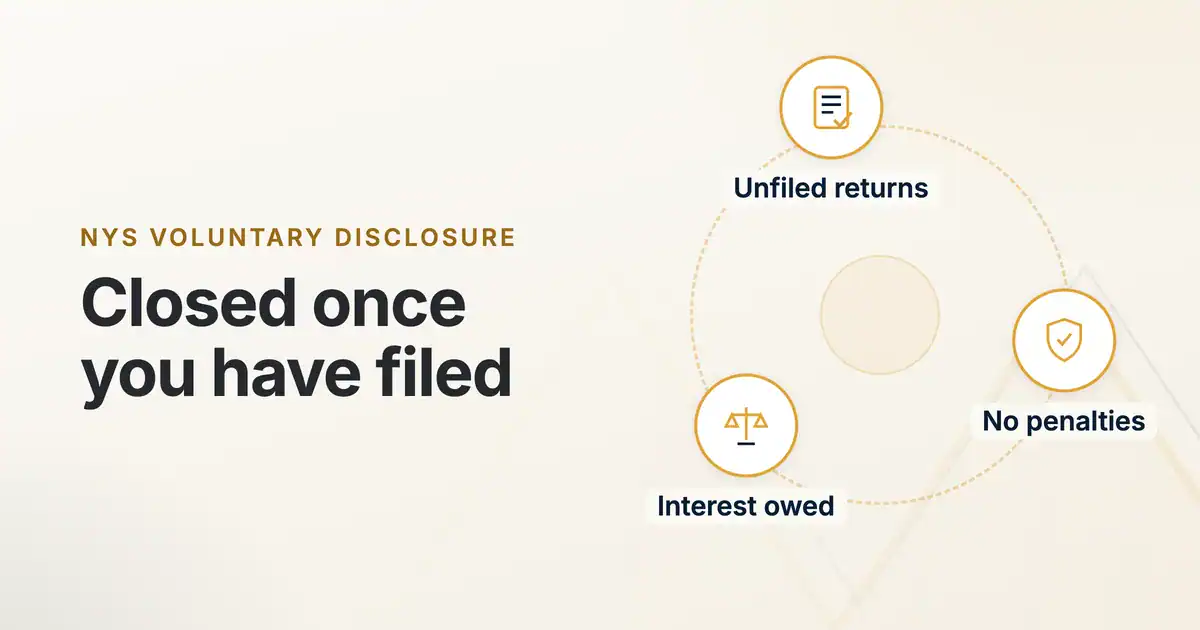
New York’s Voluntary Disclosure and Compliance Program lets people and businesses who haven’t filed and paid their New York taxes come forward before the Tax Department reaches them. If you’re accepted and pay the tax and interest, the state won’t impose penalties or bring criminal charges. One line catches people. If you filed a return but didn’t pay in full, you don’t qualify.
We understand why people put this off. The program exists so that coming forward costs less than being found.
If there are New York years you never filed, call us at 516-209-2594 or reach out for a free consultation before you apply.
Why the State Offers Better Terms for Coming Forward
The purpose of a voluntary disclosure program is to bring taxpayers back into compliance by offering better terms to those who come forward on their own. The Tax Department’s program page says it encourages people who haven’t filed and paid to come forward voluntarily and pay what they owe.
In return, the state gives up two things it could otherwise pursue. It won’t impose penalties, and it won’t prosecute. The program covers all taxes the Tax Department administers, including income, corporate and sales tax.
The City of New York runs its own separate disclosure program for city taxes. This post is about the state’s program.
Who New York Lets Use It
Eligibility comes down to whether the state has already started on you, and what kind of problem you have.
Returns Never Filed
The program is built for taxes you never reported. To be eligible, the Tax Department says you must not be under audit for the tax type and years you’re disclosing, must not have received a bill for those past-due taxes, and must not be under criminal investigation by a New York State agency or political subdivision. It also excludes disclosing participation in a reportable or listed tax shelter.
The department adds that any taxpayer who meets those criteria can take part, even if the nonpayment involved fraudulent or criminal conduct.
Filed but Not Paid, and Why That Route Is Different
If you filed your return on time and simply couldn’t pay, this program isn’t for you. The Tax Department says to wait for the bill and then request an installment payment agreement. We explain that route in a New York installment payment agreement.
The Two Things the Tax Department Agrees To
If your application is approved and you arrange to pay the tax and interest, the state commits to two things. “We won’t impose any penalties on you,” the program page says, and if the failure to pay was a criminal offense, it won’t prosecute.
Those promises cover only the taxes and periods you listed in your application. Anything you left out stays open to collection, penalties and possible prosecution.
The Tax Law also protects what you disclose. The department says it can’t use information from a voluntary disclosure application against you or share it with other agencies, though it still exchanges filed returns with the IRS and other agencies as it does for everyone. That protection ends if you intentionally break the agreement.
What You Still Have to Pay
You still owe the tax and the interest. Interest accrues on the unpaid tax, and the state may send you a bill based on your disclosure that you’ll need to pay as stated.
If you can’t pay in full, the Tax Department says installment payments may be possible, and it may ask about your finances first. If you also owe the IRS, our overview of IRS installment plans covers the federal side.
How the Application Moves From Disclosure to Agreement
It happens in a set order, and the order matters.
First, you apply online and explain the taxes you owe, why you didn’t report and pay them, and why you believe you qualify for a limited look-back if you’re asking for one.
Second, you wait. The Tax Department is explicit that you shouldn’t file your returns before you receive an acceptance letter and agreement. It may ask for more information before deciding.
Third, if you’re approved, you sign the Voluntary Disclosure Agreement and mail it together with signed returns that accurately show the tax owed for the periods covered.
Finally, you pay, and you stay compliant. The agreement is broken if you intentionally give false information, leave out material facts, fail to pay what you agreed to, or break the tax law in the future.
The Tax Department’s fuller guidance is in Publication 200, The Voluntary Disclosure Program, and its program line is 518-457-4448. We’d still suggest talking your situation through with a CPA before you call, so the application tells the state only what it needs and tells it accurately.
When This Program Cannot Help You
It’s the wrong route if the state already has you on its radar. An audit, a bill or a criminal investigation for the same taxes takes you out of the program.
It’s also not a way to pay less than you owe. If the balance itself is more than you can realistically pay, New York has a separate program for settling a New York tax debt for less, on its own terms and its own forms.
How We Prepare the Returns and the Disclosure Together
A disclosure is only as good as the returns behind it. The state wants returns that accurately show what you owe, so we build those from your records while the application is pending, then hold them until the acceptance letter arrives, as the Tax Department requires.
Unfiled New York years can come with unfiled federal years. Our guide to New York and IRS tax problems covers how the two agencies’ collection tools compare, and our help filing the returns you never sent covers the federal returns that may be missing for the same years.
Guy A. Finocchiaro, CPA, holds a certificate from the State of New York. If you’re weighing whether to come forward, we’ll look at your situation with you, in our Uniondale office or virtually, and tell you whether this program fits before anything goes to the state.
FAQ
What is the lookback period for voluntary disclosure in New York?
The Tax Department publishes a look-back for one situation, interest or investment income from foreign bank accounts. It’s a minimum of six years if you held the account six years or more, or the number of years you held it if less. For other disclosures, you explain in your application why you believe a limited look-back applies.
What is the purpose of a voluntary disclosure program?
It encourages people who haven’t filed and paid to come forward on their own. In New York, approved applicants who pay the tax and interest avoid penalties and criminal prosecution for the periods they disclose.
What is the purpose of voluntary disclosure?
To resolve unreported tax on better terms than the state would offer if it found the problem first. You disclose the taxes, pay them with interest, and agree to stay compliant going forward.